Case study — Personal
Konichiwa, a year of getting dressed
Personal project, fashion styling. A wardrobe treated like a design system. Ghibli men for the mood, Zara and local brands for the cart, one spreadsheet to make sure the cart closes.
- Client
- Personal
- Year
- 2024
- Role
- Styling & wardrobe brief
- Discipline
- Styling, Editorial, Personal
- Read
- 9 min read
Fashion Style & Guidline is a personal wardrobe brief I wrote for myself in 2024. It is a guideline in the truest sense: a document I open before I open a tab on the Zara app, so I stop buying the same black shirt for the fourth time and start buying the piece the wardrobe actually wants next.
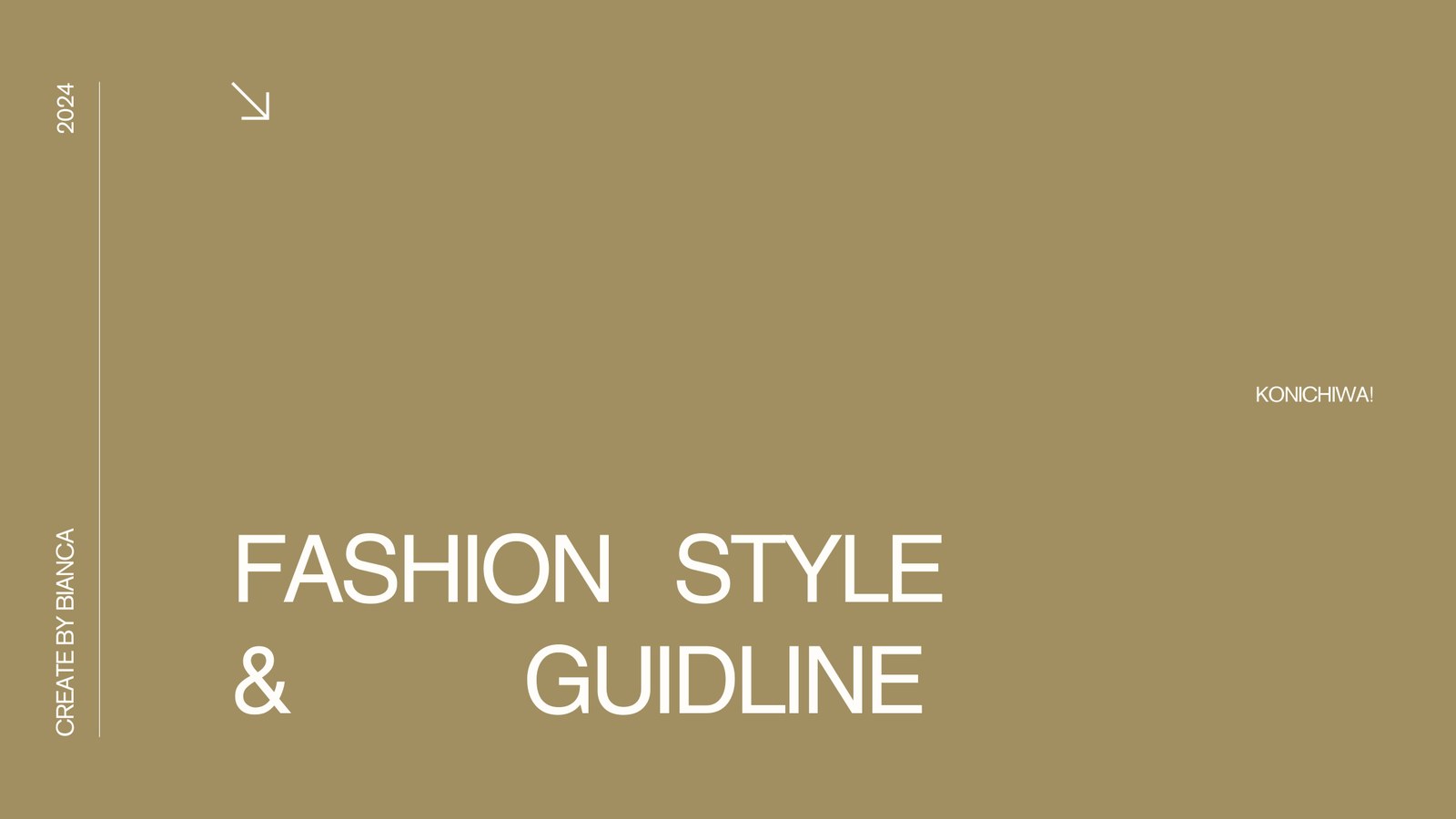
Fashion Style & Guidline · cover · 2024
“I kept getting dressed in a rush and shopping in the same rush. The guide was the hand brake.
”
The reference
The reference folder is not a mood board of menswear editorials. It is a folder of Ghibli men. The brief opens on this page because it is the honest answer to the question of where the wardrobe is aiming.
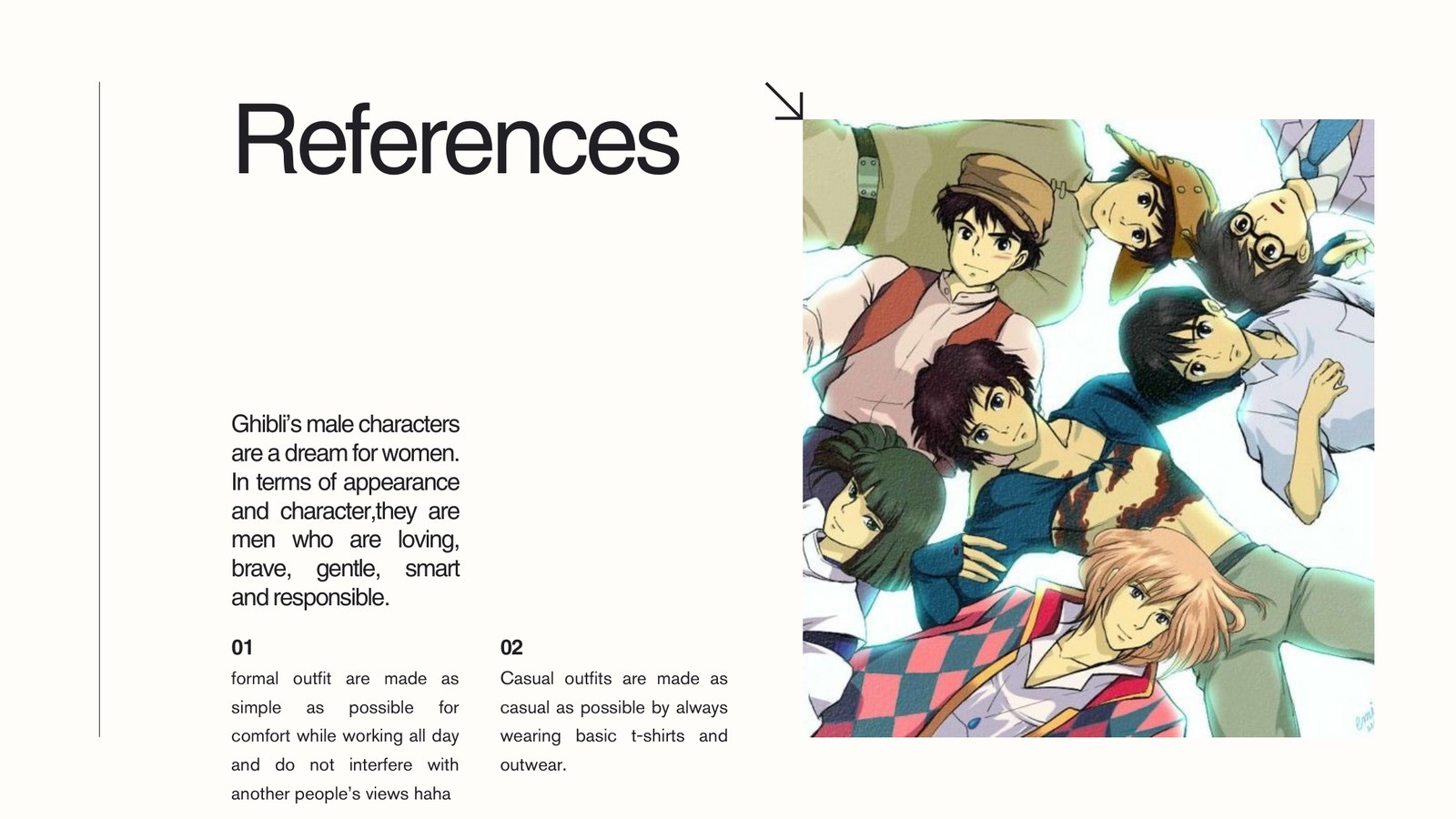
References · Ghibli's male characters · brief authored 2024
The bet is that picking one reference family and sticking to it is worth more than a wider net. Ghibli men are loving, brave, gentle, smart, and responsible. Whether the wardrobe reaches that in person is a different question. At the very least the clothes stop disagreeing with the brief.
Two wardrobes, one person
The guide splits everything into two categories. The split is written on the edge of the divider pages, in vertical type, so the category is never ambiguous mid-scroll.
- Formal covers work, fancy dinner, and meetings with clients. The rule: as simple as possible for all-day comfort, and never loud enough to interfere with someone else's view.
- Casual covers nongkrong, traveling, and the casual date. The rule: basic tees and outwear, nothing that has to be dry-cleaned after sitting on the floor at a warung.
01/Silhouette
Boxy top, straight bottom
Every outfit repeats the same silhouette: a boxy shoulder on top, a straight leg underneath. The silhouette does not change between formal and casual. Only the weight and colour of the fabric changes.
02/Palette
Earth, not brand
Sage, olive, khaki, cream, chocolate, black, and one off-white. No logos. No house colours. If a piece comes in brand-coded colour, the item is skipped in favour of the plain one.
03/Layer logic
Outwear does the talking
The tee is almost always a plain crew. The shirt is almost always a plain button-up or a knit polo. The cardigan, the shacket, or the suede blouson is the one piece that is allowed to have a personality.
04/Shoe rules
Two pairs, three jobs
One pair of black Nappa Milano derbies covers formal and most of casual. One pair of Puma sneakers covers the days the derbies would be a lie. One pair of black buckle sandals covers traveling and the flat. Three pairs, every outfit in the guide accounted for.
05/Repeat
Outfits, not items
The guide is organised by outfits, not by pieces. Each plate is a complete fit, so the brief tells me what to wear, not what to own. The overlap between plates is intentional: the same trouser appears three times, because a trouser that only works once is not in the brief.
Formal
Formal is the wardrobe at work, at a fancy dinner, and in any meeting where someone else is paying for the coffee. The opener of this section is deliberately unglamorous: a crop of two men in olive and khaki suiting, with three small Ghibli stills pinned to the edge as a running reminder of the mood.
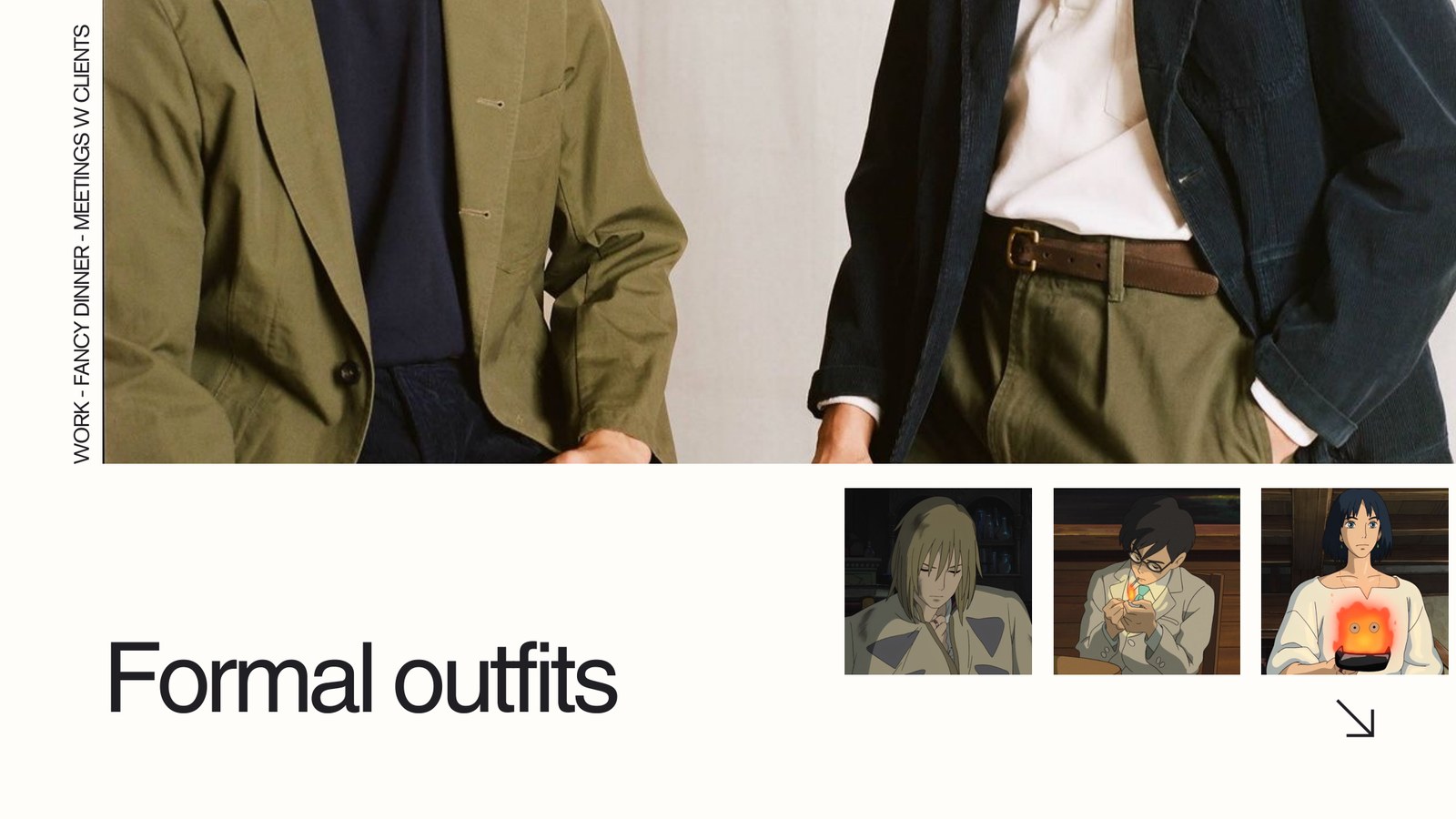
Formal outfits · work · fancy dinner · meetings with clients
The formal plates all share the same recipe: a relaxed trouser, a clean shirt or knit, and a single jacket or overshirt that carries the fit. The jackets are cropped boxy, not broken-shoulder tailoring, because the brief is a day, not a boardroom.
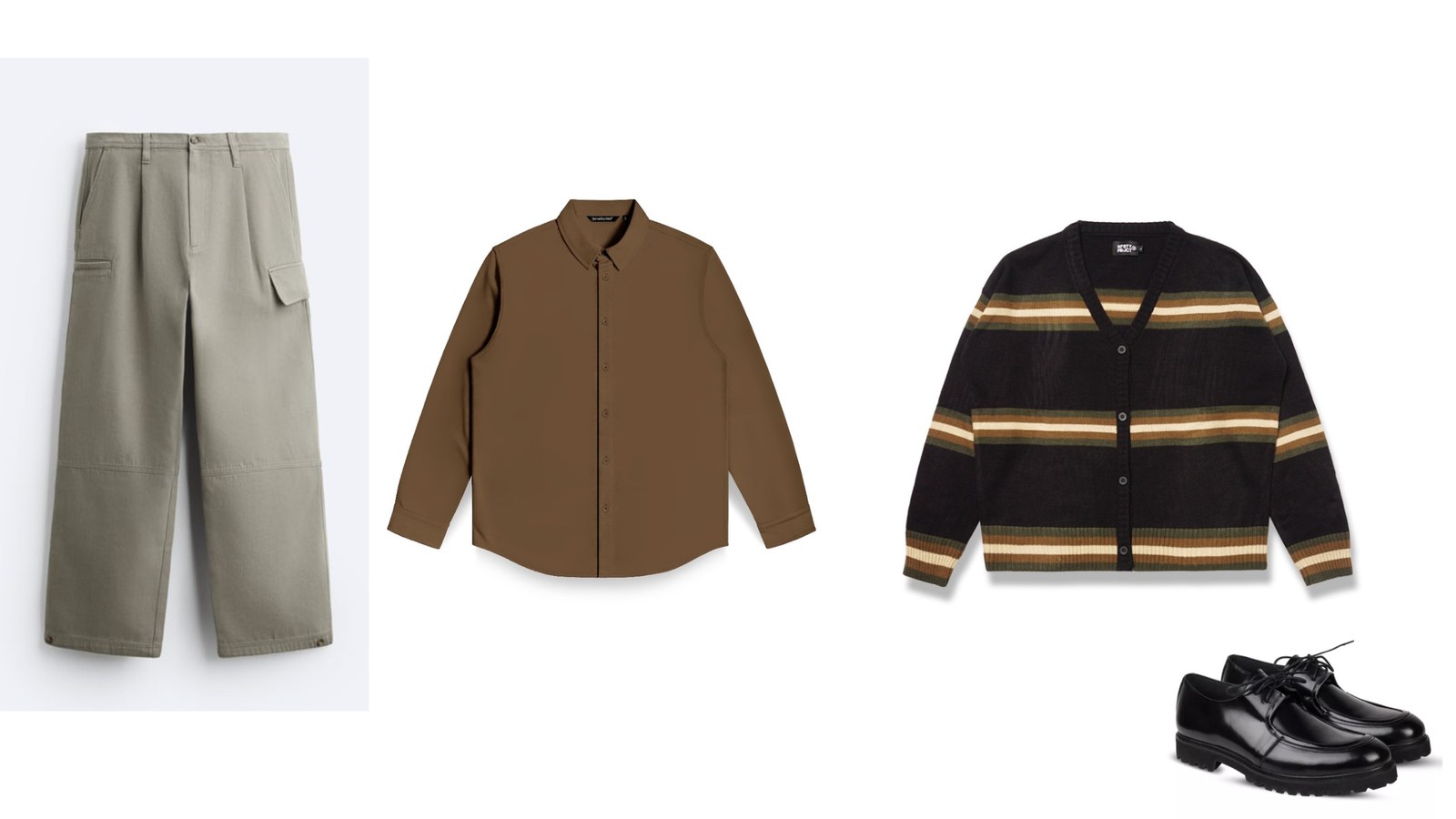
Formal plate · sage trouser · chocolate shirt · striped cardigan · Nappa Milano derby
Casual
Casual is the wardrobe at nongkrong, on a trip, and on the kind of date where the restaurant does not own a reservation system. The opener is a chocolate suede blouson over a plain black tee, which is the whole brief for this category in one photograph.
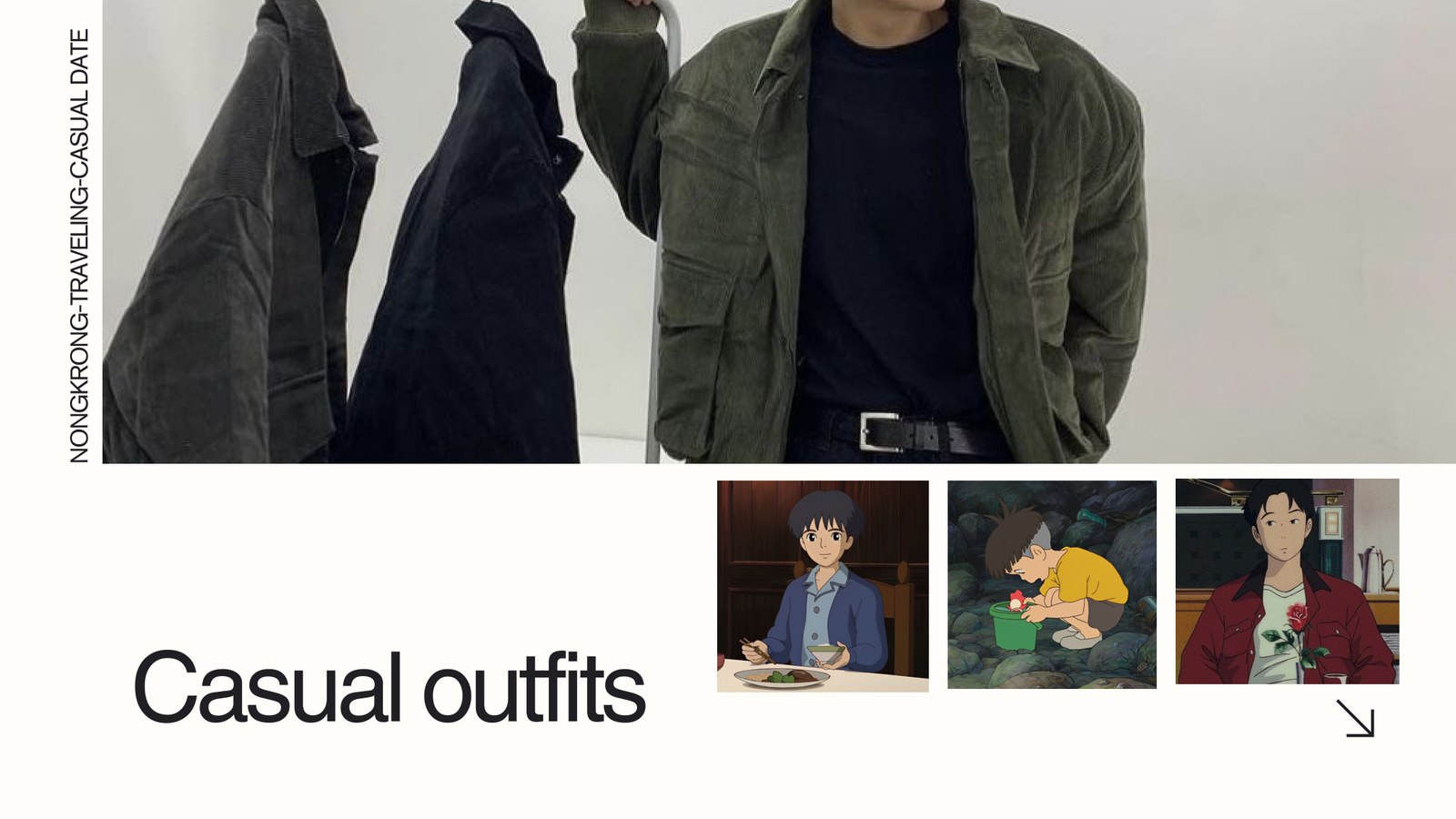
Casual outfits · nongkrong · traveling · casual date
The casual plates drop the button-up for the plain tee and trade the derby for the sneaker. Everything else holds. The overshirt stays. The boxy jacket stays. The proportions stay. Only the volume on the top half comes down a notch.
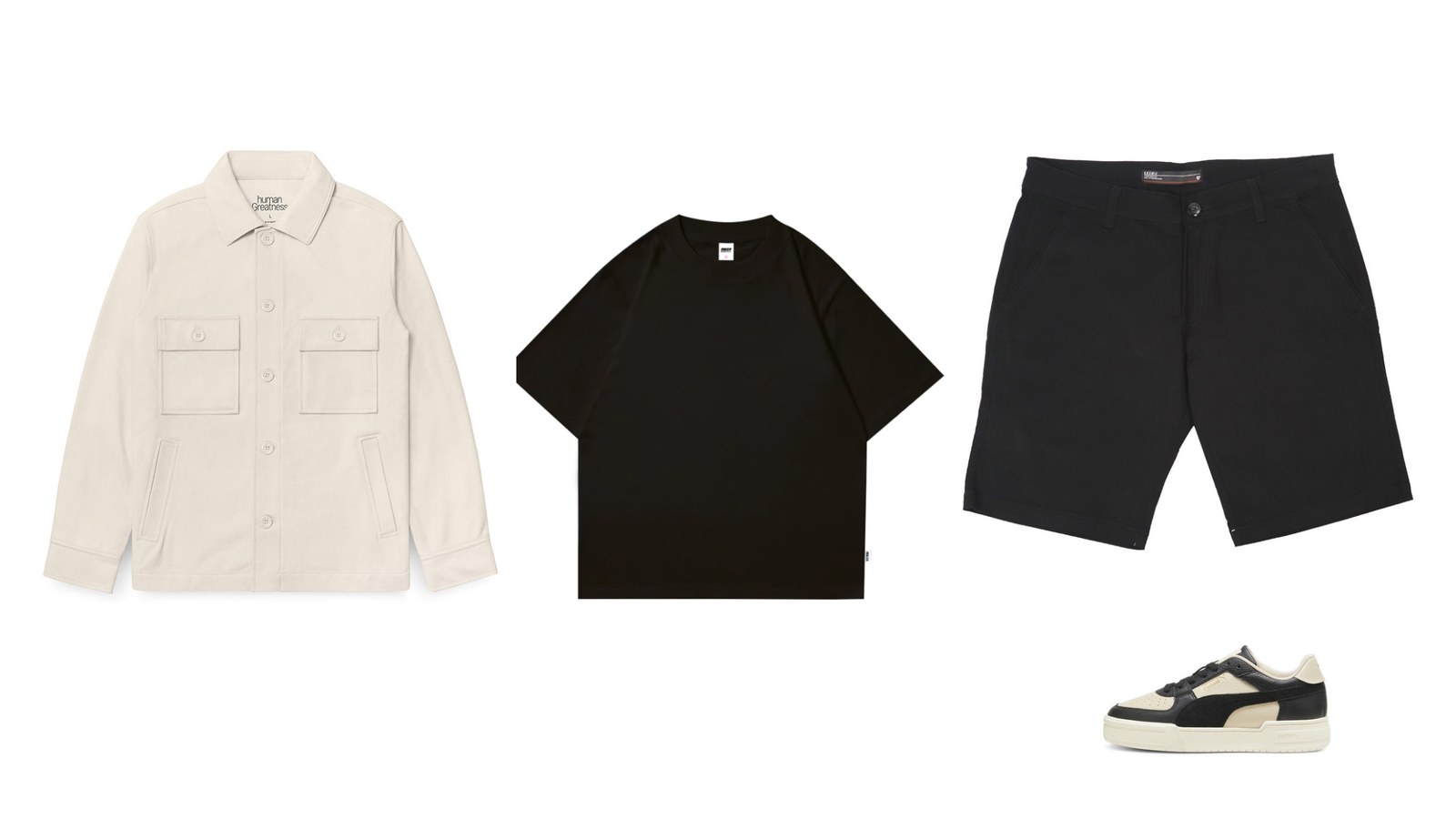
Casual plate · cream corduroy overshirt · black tee · tailored short · Puma CA Pro
The budget, written down
The guide is not just outfits. It is also a spreadsheet. Every piece was linked to a shop, given a price, and added up before anything was bought. The hand-annotations on the budget page are the actual notes I wrote on the cart: brand names, store locations, colour choices.
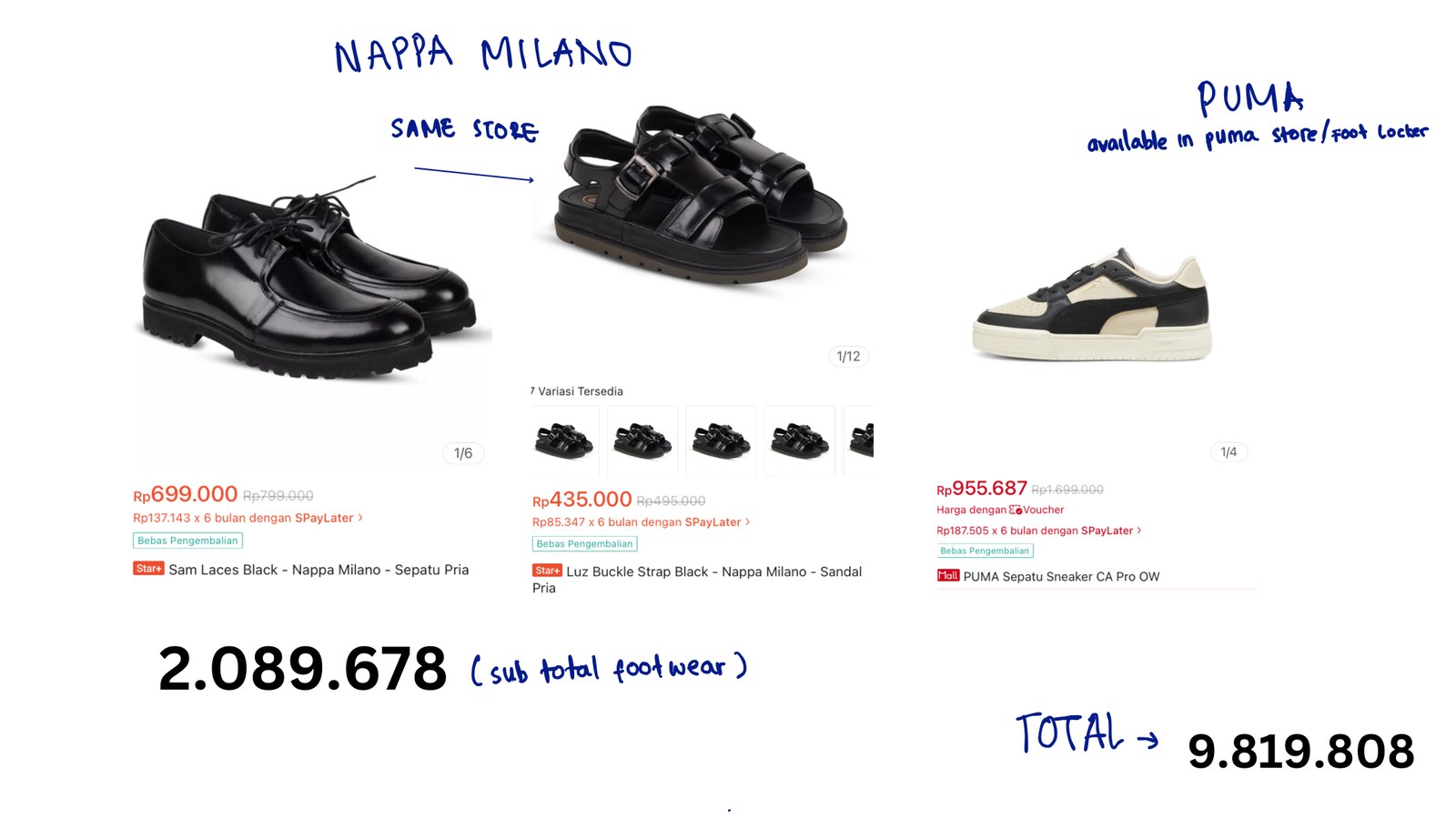
Budget · outfits sub-total · annotated from the cart
Outfits sub-total
nine complete fits across two categories
Footwear sub-total
Nappa Milano derby, buckle sandal, Puma CA Pro
Total budget
the whole year, written down before the first cart
Pairs of shoes
that cover every outfit in the guide
Writing the budget before opening the cart was the point of the whole document. The nine-million figure is not small, but it is finite, and it is the reason the wardrobe did not quietly grow a tenth black shirt in the middle of the year.
Konichiwa, arigatou
The guide opens with Konichiwa on page one and closes with Arigatougazaimasu on page twenty-one. Both pages are the same olive-khaki field, same vertical byline, same arrow. The bookends are part of the brief: a wardrobe is a conversation with the year, and it is polite to start and end it.
Closer · arigatougazaimasu · the guide closes on the same field it opened on
Finish
The guide shipped as a twenty-one-page PDF. It was written for one person and used by one person, which is the only distribution number that matters for a document like this. The wardrobe it produced is still in rotation. The next edition is already half-written in a note on my phone.